List 3 ways in which your proposed ESting meets the requirements of the brief.
I will make my Esting under ten seconds long, I will include the E4 logo at the end of my submission and I will include a soundtrack supplied by E4.
Did you need to make any changes to your ideas to fulfill the demands of the brief?
No, after discussion with my teacher it was agreed that my planned Esting is fit for purpose providing the violence is not too graphic.
Have you had to consider any legal or health and safety issues when planning?
Yes, I have permission to use E4's copyrighted music. I have completed pre-production paperwork, including a risk assessment.
How many people are in your team and what is/will be your role? I will be directing and using the camera while I have two of my classmates will be acting for me.
When is the pre-production, production and post-production deadline?
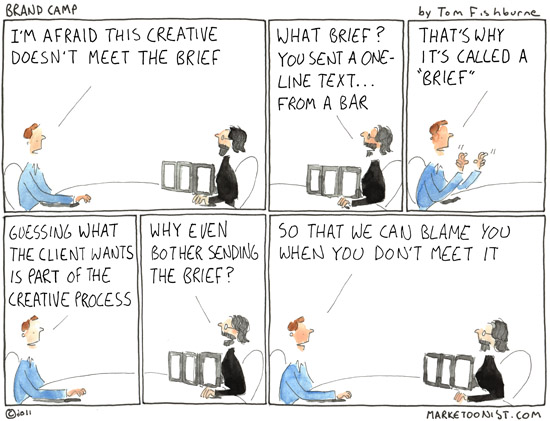
A brief is a set of signed rules/guidelines set by the client for the worker to follow, if the rules of the brief are broken then the worker will not have delivered the product that was promised and the agreement will have been broken. If a client makes a deal with workers then those workers have been commissioned, this basically means that they have been hired to create whatever it is the client has asked for, they will be responsible for script writing, locations, casting, etc. so they are basically tasked with the pre-production process. In terms of media tender just means to wary of your target audience to ensure that you don't offend anybody. You could also respond to a brief by entering a competition rather than being commissioned.
When entering the Esting competition we were not allowed dialog, real violence, gore, etc. so we had to be mindful of that, we were also limited to keeping it ten seconds long, we had to work around the guidelines just to be allowed into the competition. We had no room to negotiate the brief as we were not commissioned to make it and we submitted it voluntarily. As mentioned earlier we were asked to keep the entries family friendly, however, we had complete freedom over the genre, style and narrative of our animation. I did not have to change my final idea whatsoever because I met the guidelines completely. A client will usually set a deadline and a budget because they plan to release the film as quickly and as cheap as possible without sacrificing the quality of the final product.
Someone may respond to a brief because they think that it may work better in a certain way, whether that improves the quality, saves money, etc. While working on the Esting brief I learned how to create lightning effects in after effects which may prove useful in the future if I decide to pursue a career in media. While making the animation I took on all of the roles, director, camera work, editing and sound, this made decision making a lot easier and sped up the whole process because I did not have to consult anyone, however, it did mean that it was harder to get another opinion.
There are a few different types of briefs:
"According to Wright, the schism was born out of Marvel’s desire to create new draft of the movie without Wright and Cornish. “Suddenly becoming a director for hire on it, you’re sort of less
emotionally invested and you start to wonder why you’re there, really.”"- Nerdist June 2017.
CONTRACTUAL: A legal brief written by employer and employee which secures rules and guidelines of the job that the employer is contracting the employee for.
FORMAL: A document that holds detailed information about what the employer wants the company to achieve without wasteful information.
INFORMAL: A verbal outline of what and how the employee should do their job and the employer and employee will agree the details of the contract.
CO-OPERATIVE: Two or more companies are hired to work on the same project\job where they will work as a single team. All companies involved will be held responsible if the deadline is missed or the client is not happy with the outcome.
NEGOTIATED: This would be brief where the client and the employee will both discuss and agree on the job and how it will be completed as well as the payment, deadline, etc.
COMISSION: A large company will employ a smaller company to basically do their work for them but all rights to the project will go to the client.
This is a screenshot from the E4 website showing the terms and conditions of the competition and proving the legislation of the competition.
I chose to write a blog post rather than giving a presentation because I find it easier.
My animation was an action, stop motion animation that I intended this for people of either animation, it has very little narrative as it was intended as just a simple fight scene, my characters were enemies with lightning based powers but other than that I gave no more backstory.
Most of the feedback I received matched my intentions, everybody knew that it was intended to fit the action genre.
The feedback shows that people knew I was aiming it at children to teenagers.
A couple of people commented on how the animation was outweighed with special effects, to some extent I agree, however I think that if the effects weren't there it would mean that the video would lack something.
I received online feedback for my animation and there was a fairly equal amount of males and females which I believe is a positive because I have equal opinions from either gender will will mean that this is more of a "fair test".
All but one person understood that the narrative was two characters fighting each other in a video game style.
Every respondent said they thought that the idea was creative and that they liked what I had done.
I experienced only one constraint whilst creating my Esting which was using after effects, I had no previous experience using the software and I had no idea how it worked which made it difficult to make the charecters shoot lightning and to make the environmental affects that I intended on having , luckily one of my classmates was very comfortable with After-effects and taught me how to use it and create the lightning effects that you see on Esting.
I managed to comfortably meet the time frame that I was given with ease, all went well, I decided to re-shoot in a better location and was taught valuable after effect skills very quickly, all the times and tasks that I had set myself were met.However, I am still struggling to get feedback, I have emailed my classmates and posted a copy of my survey on social media and have only received two responses.
I believe that I completely matched the guidelines of E4's Esting competition and that my Esting is viable to be aired on E4.
I feel like this project has given me a great new tool in the form of after effects, it will be very useful in other projects that I have that I can now add special effects to which could improve the overall outcome of my future work.
I believe that animation would not be my first choice as a career because I am much more interested in other areas of media such as screen writing and choreography but if I had to I believe that with enough hard work I could, make something out of animation.
1: It was 10 seconds long, it was suitable for young audiences, it has the E4 logo.
2: I didn't need to change anything to fit the brief.
3: I did not need to consider legal or health issues while planning.
4: Two actors Lochlan and Luca. One director/camera Luke(me)
5: 24th November was our deadline.
I have decided to use people in my stop-motion animation ESting, I will target it towards my primary audience which will be geeks, young adults and children. of the demographic C and below. My secondary audience is Middle age men or women who appreciate visual effects.
The overall idea is to have two characters sliding around with magic beneath their feet fighting with projectile fire, one character will have white based powers and one will have purple based powers, the will chase and fight each other until both use a powerful projectile that explodes and creates the E4 logo. The backing track for my animation will be one of the generic soundtracks that can be found on E4's website.
It will be difficult to use after effects to create the magic because I am unfamiliar with after effects.
I want to use either a forest setting or the college setting for my ESting
E4 is a television channel owned by "Channel Four Television Corporation." who also own Film4, 4seven, channel 4, etc. It is available to everyone as it is a free-view channel. The channel began in January in 2001 and has become an extremely popular channel for comedy especially with shows like the Big bang theory or How I met your mother. E4 has a primary target audience of 16 to 34 year olds because of the range of comedy from Big bang theory to The Inbetweeners. The E in E4 stands for entertainment. I believe the psychographic target audience is from B to D range which is a vast majority of TV viewers.
Estings are E4's answer to an ident.
"the competition is open to anyone who thinks they have got what it takes to create a unique 10 second brand sting" It encourages young animators to get some experience in making animations for TV and they get the chance to have their creation aired for the world to see.
This Esting is a comedic animation aimed at adults and teens. The Esting tells the story of a woman knitting a thong for a man and he "tests it".
This Esting a comedic short aimed at teens and below, It is about a man with a big head who sneezes and his head shrinks.
This is an Esting about a Russian doll character who has multiple personalities, I believe it is aimed at all ranges.
Planning and prep.
For planning and preparation for our animation task we researched and made Zoetropes, Praxillascopes and phalmatropes, We also practiced making animations using lego and live action animations to get some idea of how our animation would work.
For my Esting I plan to use inanimate objects to tell a short story about rivalry because I prefer to have full control on the project and find it easier to work by myself.
We did three practice animations, for the one above we were asked to have an impossible movement in a stop-motion animation video using people, we also made two more, one using lego and one in which we animated an inanimate object. The erason we did this was to practice animation techniques in preperation for our E4 Esting entries, I preferred animating people and therefore that is what I will do in my Esting.
Task one: we were asked to use stopmotion animation to make people or objects travel in strange ways i.e. surfing on chairs. I think that this was the best of the three tasks because 1, it was a simple but fun idea. 2, we all worked well together. 3, there were no complications. We did however need to 1, manage time better. 2, think the idea through.
Task two: we were asked to use "figures" to tell a story using stopmotion animation. I think this went well because 1, i knew what I was doing and how I want to do it. 2, the props were easy to work with. 3, I could change my idea at any time. However, I should have 1, used a tripod. 2, the effect I wanted to use was missing.
Task three: use stopmotion animation and figures to say "let go of me." What went well 1, I had help. 2, The idea was basic. 3, we could use the greenscreen. I should have 1, mamaged time better. 2, should have used a different technique.
Definition: Persistence of vision- "refers to the optical illusion that occurs when visual perception of an object does not cease for some time after the rays of light proceeding from it have ceased to enter the eye"
Thaumatrope
Created by an English physician named Ayrton paris in 1825.
How it works: An image is drawn on either side of a disc and that disc has a piece of string tied to either side and when the string is twisted and pulled the duck will spin. Using the theory of the persistence of vision the brain retains the an image for a short amount of time allowing us to see both sides of the disc merged into one.
Phenakistoscope Created in 1832 by a Belgian physicist named Joseph Plateau and an Austrian professor of practical geometry named Simon Stampfer.
"The phenakistoscope used a spinning disc attached vertically to a handle. Arrayed around the disc's center were a series of drawings showing phases of the animation, and cut through it were a series of equally spaced radial slits. The user would spin the disc and look through the moving slits at the disc's reflection in a mirror."- Juxtapoz Magazine.
Zoetrope
The Zoetrope was invented in 1834 by George Horner.
A Zoetrope works by placing a strip of drawings inside a drum, when the drum is spinning you can look through the slits and the image on the strips will look as though they are moving.
Praxinoscope
The Praxinoscope was created in 1877 by a french man named Charles-Émile Reynaud.
The Praxinoscope work in a similar way to the zoetrope, except instead of looking through slits to view the animation you would have a mirror placed in the center of the device that you would look into.
Kinetoscope
The Kinetoscope was invented by Thomas Edisn and William Kennedy Dickson in 1861.
This device works by passing a strip of film between a lens and a light bulb at just the right speed while a viewer looked through a "peephole" to make it appear asthough the image was moving.
These developments were needed to please the fast growing audience who wanted more and more of these "animations" the dream for inventors was to show moving images on a much larger scale, hence the cinema. Part 2.
Part 3.
Jackboots On Whitehall is a stop motion feature film that used action figures to tell a ww2 story. It is aimed mostly at adults, given its humor and language but was apparently fairly popular with teenagers as well.
Kubo and the Two Strings is a film aimed at children, it has friendly language, no gory effects and tells a heroic tale about a young boy who becomes a hero with some help from strange friends.
This Xbox advert was aimed at around twelve year old children (judging by the games) the stop motion allows them to create detailed shapes much easier and with more freedom because we don't see the actual progress.
This ad for ebay is aimed at people over 18 because supposedly you must be 18 or over to use the site. The ad uses both drawn and real life objects to show what ebay offers.
This music video uses stop motion animation to show what this lady does in her everyday life but uses only her bed. There is no target audience for this video because music doesn't have an age range (some exceptions).
This video uses stop motion and standard filming techniques and mixes them to tell a story about a boy in love with a girl from a parallel world. Once again, there is no target audience because it's a music video.
This is an E4 Esting it is aimed at people in education because of its school setting, it uses drawn animation to gives us a short sketch of a bored student.
This Esting uses animation to show us the water cycle but also uses it to create small creatures like snakes and fish that transform into other objects.
Conclusion.
Overall I believe that animation was created to push the limits of video entertainment, animation could push any limit, it can make pigs fly and men as fast as cars, eventually it developed and was used to help live action films to break those walls as well but animation is still and in my opinion always will be a great way to entertain people, and I believe that it was made for people who liked the idea of pushing those limits, like children or imaginative adults or just anyone who dreamed of flying their dog into a giant talking face.... Animation is for people who like to laugh when watching it.
I believe that stop motion will always be a part of the media industry in one way or another, they are currently making a stop motion animated computer game called cupheads, the developers want that 1930's cartoon feel because people will enjoy it, some classic and great films will never be remade as good as their original stop motion versions and although people have many other animation methods and they do push stop motion to the side a lot, I believe that there will always be that one off game or film that is loved because it uses this style.