Monday, 19 February 2018

Single camera shorts techniques.

This blog post will cover the key points and terms of single camera productions and will discuss the advantages and disadvantages of single camera production. In a single camera production obviously only one camera is used, this gives the film makers the ability to get the audience involved in the scene without worrying about "Crossing the streams" in other words without getting a camera in shot, this allows easier POV's, arcs and much more camera movement. However, the fact that only one camera is used means that the scenes will take longer to do because the camera will have to be moved to capture different points of view whereas a multi camera set up allows the different perspectives to just be added in editing from the other cameras. This is an example of camera movement that would be impossible with a multi-camera set up 0:17.

It is much easier to light a scene using a single camera production as each shot can be set up individually so you can change the set up to get the best lighting for each shot which may have proven difficult to achieve with multi-camera as the scene is shot all in one go so the light may differ from each camera.

The lighting in this shot is only possible in single camera productions as multi-camera set ups require the whole shot to be evenly lit. 
Image result for horror lighting
When it comes to sound a lot of single camera productions will use a second, back up camera in scenes that have a lot of dialog going back and forth between characters, in editing the video will overlay the audio slightly so that it doesn't seem messy and jumpy. A lot of multi-camera productions i.e. The news will allow a camera or two to be seen in the shot and they will often have mics hidden with the "actors" clothes or they will have a boom pole to capture all the audio in the scene.

In this scene we can see that the boom is in shot, Boom mics can be difficult to work with in multi-camera set ups because it may not be in one cameras perspective but it may be right in the middle of another. In shows like the news it doesn't matter that you can see the equipment because it doesn't need to hide it like TV shows that are trying to force realism.Image result for boom in shot
During post-production (editing) the editor(s) have a lot of footage to work with, especially when working on multi-camera productions, a lot of footage will be wasted in post- production which means that a lot of time and money has to be thrown away, however this does mean that the editor(s) are spoilt for choice on shot variation. However, on the other hand in single camera productions there is not as much footage which  means that the quality of the final product may not be perfect because the editor(s) can only work with what they have so is it worth spending the extra money or should you risk the quality been a little worse? Shows that are shown on a regular basis such as Eastenders will need to be produced quickly, multi-camera set ups allow the episodes to be made faster because there is multiple takes of the same shot giving editors lots of footage to work with.
Certain types/genres of TV and film are better off with either a single or a multi-camera production, for example, Soap operas, news shows, etc. is better off being multi-camera because you can capture the same reactions, dialog, etc. from the same moment and it won't feel as-though it has been acted out multiple times, a good example of this is Louis Theroux's documentaries. Whereas a horror films, most documentaies, etc. Would typically use single camera because it offers more movement and less equipment usually means that people will act more naturally in documentaries.
This is the set for Mrs Brown's Boys, a multi-camera comedy show. You can see the cameras and the lights. 
Image result for mrs brown's boys set

Thursday, 1 February 2018

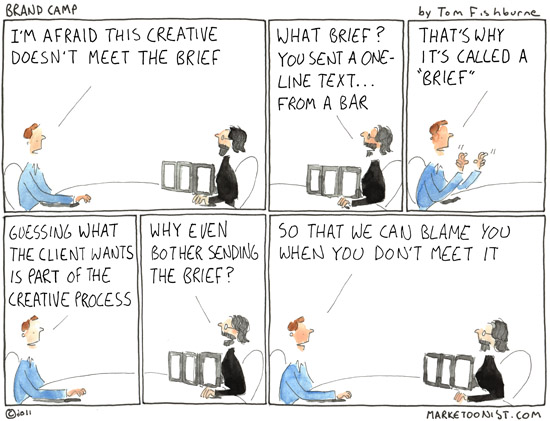
Working to a brief.

A brief is a set of signed rules/guidelines set by the client for the worker to follow, if the rules of the brief are broken then the worker will not have delivered the product that was promised and the agreement will have been broken. If a client makes a deal with workers then those workers have been commissioned, this basically means that they have been hired to create whatever it is the client has asked for, they will be responsible for script writing, locations, casting, etc. so they are basically tasked with the pre-production process. In terms of media tender just means to wary of your target audience to ensure that you don't offend anybody. You could also respond to a brief by entering a competition rather than being commissioned.
 When entering the Esting competition we were not allowed dialog, real violence, gore, etc. so we had to be mindful of that, we were also limited to keeping it ten seconds long, we had to work around the guidelines just to be allowed into the competition. We had no room to negotiate the brief as we were not commissioned to make it and we submitted it voluntarily. As mentioned earlier we were asked  to keep the entries family friendly, however, we had complete freedom over the genre, style and narrative of our animation. I did not have to change my final idea whatsoever because I met the guidelines completely. A client will usually set a deadline and a budget because they plan to release the film as quickly and as cheap as possible without sacrificing the quality of the final product.
Someone may respond to a brief because they think that it may work better in a certain way, whether that improves the quality, saves money, etc. While working on the Esting brief I learned how to create lightning effects in after effects which may prove useful in the future if I decide to pursue a career in media. While making the animation I took on all of the roles, director, camera work, editing and sound, this made decision making a lot easier and sped up the whole process because I did not have to consult anyone, however, it did mean that it was harder to get another opinion.
There are a few different types of briefs:

"According to Wright, the schism was born out of Marvel’s desire to create new draft of the movie without Wright and Cornish. “Suddenly becoming a director for hire on it, you’re sort of less 
emotionally invested and you start to wonder why you’re there, really.”"- Nerdist June 2017.

This is the winner of a competition of the website named BlueCat who has gained profit and notoriety,etc.
Cadaver Dog by Judy Soo Hoo & Isaac Ho
When a young autistic Latina rescues a stray cadaver dog, she stumbles upon a 15-year-old cold case that no one wants solved.
Read more at http://www.bluecatscreenplay.com/past-winners-finalists/#sMcHm1ueZZaVpx80.99

 CONTRACTUAL: A legal brief written by employer and employee which secures rules and guidelines of the job that the employer is contracting the employee for.
FORMAL: A document that holds detailed information about what the employer wants the company to achieve without wasteful information.
INFORMAL: A verbal outline of what and how the employee should do their job and the employer and employee will agree the details of the contract.
CO-OPERATIVE: Two or more companies are hired to work on the same project\job where they will work as a single team. All companies involved will be held responsible if the deadline is missed or the client is not happy with the outcome.
NEGOTIATED: This would be brief where the client and the employee will both discuss and agree on the job and how it will be completed as well as  the payment, deadline, etc.
COMISSION: A large company will employ a smaller company to basically do their work for them but all rights to the project will go to the client.

This is a screenshot from the E4 website showing the terms and conditions of the competition and proving the legislation of the competition.

Image result for media brief


SOURCE: https://johnrichharrison.wordpress.com/2014/10/24/e4-sting-brief/
https://www.wikipedia.org
http://coolerinsights.com/2012/08/how-to-write-a-social-media-brief/
http://estings.e4.com/terms.html
https://nerdist.com/edgar-wright-reveals-why-he-left-ant-man/
http://www.bluecatscreenplay.com/past-winners-finalists/

The music video.

The music video was technically invented in 1941 with an invention called the "Panoram Soundie" which was a jukebox that played video clips along with a song, this device was forgotten about after World War 2 due to its competition with television, Bohemian Rhapsody was the first music video because unlike the soundie it had the visuals dedicated to the song and created to fit it. 1962 brought shows like "Top of the Pops" and "Ready!Steady!Go!" which have had a heavy impact on both producers and consumers of the music industry. The purpose of this essay is to show how music videos have evolved and adapted through the years and what is the purpose or purposes that they serve.


The main purpose of a music video is to make money,  these music videos will promote the director/artist by making their music both musically and visually pleasing and in most cases the music video adds something to the music itself, whether it makes it memorable because it was funny or strange or maybe it adds a story/insight into the song that was difficult to see before, it also means that because it now has a video to it the song can now be purchased as a DVD, although today it is rare that people purchase a DVD of music videos because there are cheaper and easier ways to access music videos, Music videos have a number of ways of promoting both the artist and the director: while the video will most likely include the artist(s) of the song it may also include the artist or the video producers unique style, the names of the band, band members or throwbacks to past videos or products from the band or artist, the easiest way to promote the director of the video would be to include his/her name at the beginning or the end of the video.


When creating a music video a good producer will do his or her best to make their video stand out, over the years music video producers have created many ways to get their work noticed, obviously a large part of the video will be the music that it goes along with so it is important to get the musician(s) in the video and to make sure that the viewers notice them, a lot of producers do this by emphasizing anything they can about the band like a logo, colour scheme or style, a good example of this is superheroes by the script, although they don't necessarily have a colour scheme you can still spot their style, logo and band members in the video. Mainstream videos are able to spend a huge amount of money on music videos, as the labels can afford it. Although, Independent videos tend to have a much smaller budget for the music video, sometimes the band or artist have to make do with a phone camera and their local are to create a music video, there are a few examples of this on YouTube. A prime example would be YouTube this online video site has seen the rise of many popular artists such as Justin Bieber and Carly Rae Jepsen, these famous musicians began posting videos of themselves singing and playing guitars on YouTube which attracted the attention of agents and record labels that made them rich and famous, however today it is much harder to get recognized due to the amount of people and videos on YouTube and because of all the new rules and regulations. 
Purchasing music has become much more complicated than it used to be, artists now get payed through royalties from their record label or manager, Creating a music video means that the artist is able to earn more royalties because there are now more products for them to receive royalties from. Every time a music video is played the artist earns a small percentage from their plays just as they would if their song(s) were played on the radio. Royalties are especially hard to calculate today because of the amount of illegal downloads, these downloads mean that the artist loses out on a lot of money Tracking the royalties for a song is a difficult task performed by royalty managers, here is a link explaining how it is done Music videos have made royalty managers jobs even harder because rather than tracking sales and  radio times, etc. they now have to calculate how many times a video has been viewed, at what times, etc.
Music videos have become much easier to create, publish and view thanks to technology, the internet, etc. The best example of this is YouTube, since 2005 YouTube has allowed many musicians to share their music online through posting a video, professional or amateur musicians can access this site and receive feedback from the rest of the world, There are also sites such as Tubedy, Vimeo, etc. but they are more difficult to use and aren't as popular.
Synergistic marketing is when an artist or band works with a larger company to promote both of their products, for example in the recent DC film "Suicide Squad" Panic at the disco covered Queen's Bohemian Rhapsody, this worked wonders for both the band and the film as it became extremely popular, a lot of the time if a band and a film/game have a similar target audience one will offer the other a temporary partnership in order to promote both parties. Synergy can also be products, like beers for example, James Bond films often have Heineken beers in them, as well as the car contracts that James Bond has had with BMW, Aston Martin and Jaguar.
In my opinion Music videos were a brilliant idea, they have grown to be a large source of online entertainment, I believe that their main purpose was/ is to make money for a lot of people, but many people have benefited in many ways because of these music videos both physically and mentally and that they will be around long after this generation is gone.

Friday, 12 January 2018

The history of the music video

The first form of music video was when called a "Panoram Soundie" this was a jukebox that played video's along side the music which made its first appearance in 1941, rock and roll films began in 1956, songs like shake rattle and roll, around the clock,etc. In 1962 shows like Top of The Pops were being aired on British television.
Bohemian Rhapsody is released in 1975 and is considered to be a groundbreaking video because of the advanced visual effects.


Ashes to ashes by David Bowie is considered a ground breaking video.


MTV is the first 24hour sattelite music channel, it launched in august of 1981 and quickly became a major hit.
In 1984 Laura Branigan's song "Self control" is refused airplay by MTV most likely due to the videos content.


1986 Sledgehammer by Peter Gabriel is seen as groundbreaking because of its animation utilizing stopmotion.


M2 is launched in 1999 as a 24 hour music video channel because MTV has largely replaced music videos with other content.
In 2005 YouTube allows people to watch videos on the internet, new artists rise using the internet.

Despacito becomes the most viewed video of all time in 2017.

Friday, 15 December 2017

Esting evaluation.

I chose to write a blog post rather than giving a presentation because I find it easier.


My animation was an action, stop motion animation that I intended this for people of either animation, it has very little narrative as it was intended as just a simple fight scene, my characters were enemies with lightning based powers but other than that I gave no more backstory.

Most of the feedback I received matched my intentions, everybody knew that it was intended to fit the action genre.
The feedback shows that people knew I was aiming it at children to teenagers.
A couple of people commented on how the animation was outweighed with special effects, to some extent I agree, however I think that if the effects weren't there it would mean that the video would lack something.

I received online feedback for my animation and there was a fairly equal amount of males and females which I believe is a positive because I have equal opinions from either gender will will mean that this is more of a "fair test".
All but one person understood that the narrative was two characters fighting each other in a video game style.
Every respondent said they thought that the idea was creative and that they liked what I had done.


I experienced only one constraint whilst creating my Esting which was using after effects, I had no previous experience using the software and I had no idea how it worked which made it difficult to make the charecters shoot lightning and to make the environmental affects that I intended on having , luckily one of my classmates was very comfortable with After-effects and taught me how to use it and create the lightning effects that you see on Esting.
I managed to comfortably meet the time frame that I was given with ease, all went well, I decided to re-shoot in a better location and was taught valuable after effect skills very quickly, all the times and tasks that I had set myself were met.However, I am still struggling to get feedback, I have emailed my classmates and posted a copy of my survey on social media and have only received two responses.
I believe that I completely matched the guidelines of E4's Esting competition and that my Esting is viable to be aired on E4.
I feel like this project has given me a great new tool in the form of after effects, it will be very useful in other projects that I have that I can now add special effects to which could improve the overall outcome of my future work.
I believe that animation would not be my first choice as a career because I am much more interested in other areas of media such as screen writing and choreography but if I had to I believe that with enough hard work I could, make something out of animation.